Diagnosis and future therapies
Validating novel disease genes to enable diagnosis and treatment
One of our goals is to understand the genetic basis of disease. For many individuals and families, the cause of their condition remains unknown even after comprehensive genetic testing.
One example began when our collaborators identified changes in HMGCS1 in five people from four unrelated families with rigid spine syndrome but no known genetic cause. Rigid spine syndrome is a rare childhood-onset muscle disorder that can cause weakness, stiffness of the spine, scoliosis, and serious breathing difficulties.
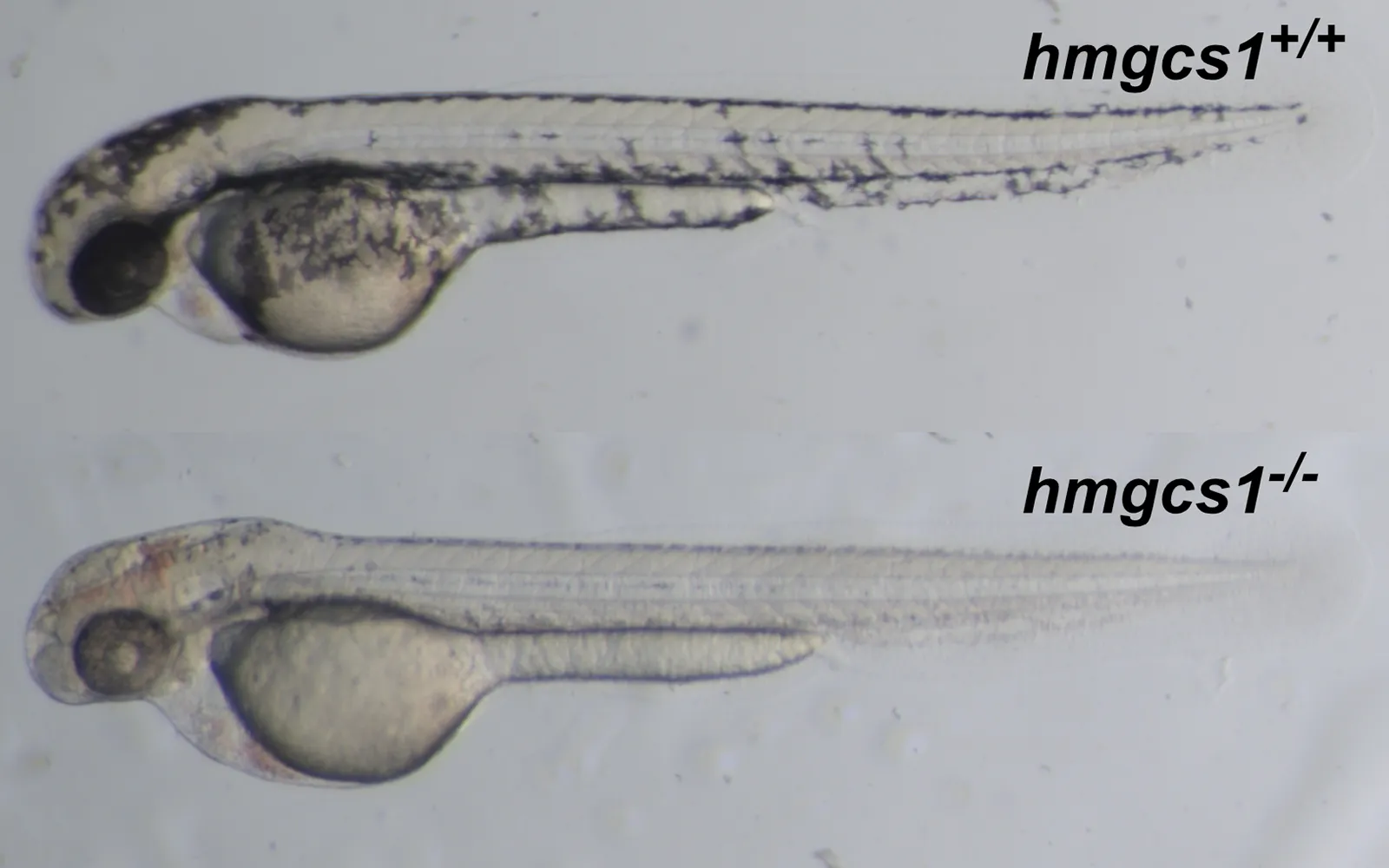
We carried out the zebrafish studies needed to test whether these genetic changes disrupted gene function. Zebrafish lacking hmgcs1 developed severe early abnormalities, including greatly reduced movement and early death. Introducing normal human HMGCS1 restored these defects. In contrast, the HMGCS1 variants identified in affected individuals were much less effective at restoring normal development and movement.
This functional evidence was essential to confirm that the variants were disease-causing. It established HMGCS1 as a new disease gene, providing a genetic explanation for these families and a basis for diagnosis in future families with similar symptoms.
HMGCS1 is part of the mevalonate pathway, which produces molecules required for normal cell function. We then tested whether supplying mevalonic acid, a downstream product of this pathway, could improve the zebrafish phenotype. Treatment increased survival, reduced the severity of abnormalities, and improved swimming ability in the disease model.
Together, these results provide a new genetic diagnosis, a model for understanding the disease, and early evidence that a targeted therapeutic approach may be worth investigating further.
Publication: HMGCS1 variants cause rigid spine syndrome amenable to mevalonic acid treatment in an animal model, Brain.